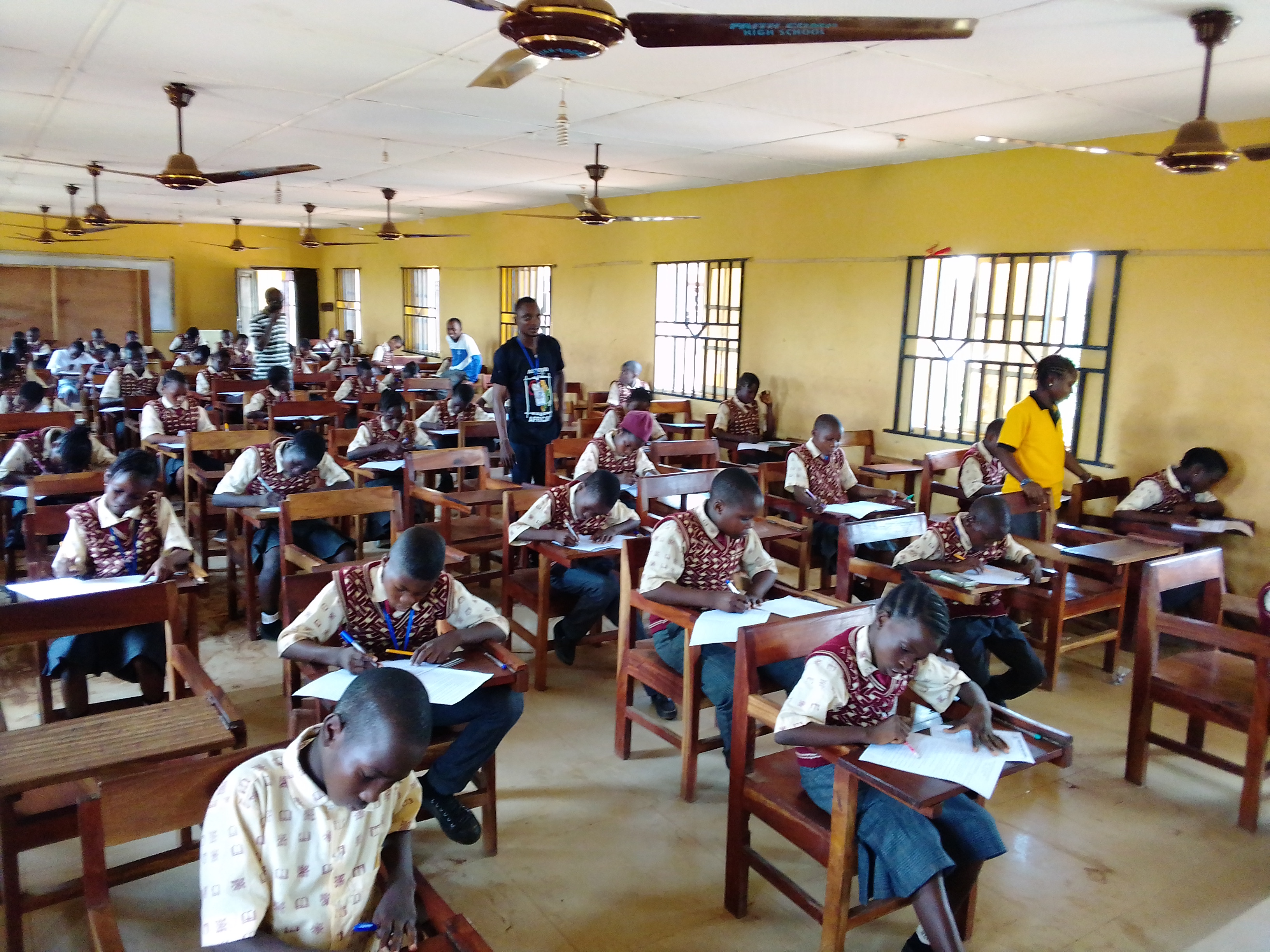
We run an integrated, international curriculum tailored towards such examinations as WASSCE, NECO for Educational Research. The philosophical orientation of our curricular programme is pragmatism. This, coupled with the principle of child-centredness, makes ample room for discovery learning and active pupil participation in problem-solving activities. Pupils are involved in the construction of knowledge for optimum transfer value and social relevance. By this arrangement, teachers are regarded as facilitators and guides in the teaching-learning enterprise, rather than exclusive repositories of knowledge.
Furthermore, we provide opportunities for learning engagements which focus on the four pillars of learning as advocated by the Delor's Report to UNESCO's 1996 New Concept of Qualitative Education viz:
Our curricular activities are organized in phases and levels covering the pre-school syllabus and grades 1 - 12.
This provides comprehensive care and adopts educational strategies that encompass health, nutrition, socialization, physical development and intellectual stimulation of kindergartners. The pre-school institution is set to give your child a head start in life by laying a solid foundation for life-long learning. It offers a child-friendly learning and play environment for careful nurturing of pupils' native capacities in order to facilitate future learning.
Careful efforts are made to inculcate social norms, the spirit of enquiry, creativity, cooperation, team work, a sense of independence, trust, and acceptance. The curriculum also focuses on the development of cognitive and practical concepts and skills, rudimentary literacy and numeracy, shapes, forms, safety and health habits etc. Ample space for play and adequate classroom space give room for sensory exploration, intellectual stimulation, motor coordination and social competence; Classroom interactions revolve round spontaneous play, expressive learning, pre-reading fundamentals, art, music, poems, and rhymes.
This is conceived as the bedrock of advanced future learning. The aim at this level is to equip pupils with the basic academic skills of reading, writing, and computation. Curricular activities therefore centre on the development of manipulative skills, mental skills, communication skills, and interpersonal skills, all of which are considered necessary for future work success. Careful effort is made to consolidate the educational gains and the rudimentary work done at the pre-school level. Learning tasks, graded according to age and range of experience, are negotiated through exploration and experimentation and are intellectually stimulating and socially rewarding, bringing about the holistic development of the growing child.
Curriculum offerings at this level revolve round government stipulations in the National Policy on Education.Students are tailored towards external examinations such as WASSCE and NECO.Students are exposed to a set of core subjects and a wide array of vocational subjects to provide a lee-way for students to make firm commitments, thus fostering overall work adjustment for future fulfillment.